There will be no meeting of the Iran nuclear deal participants on the sidelines of the UN General Assembly this week, the EU and Iran have announced.
3 hours 30 sec ago
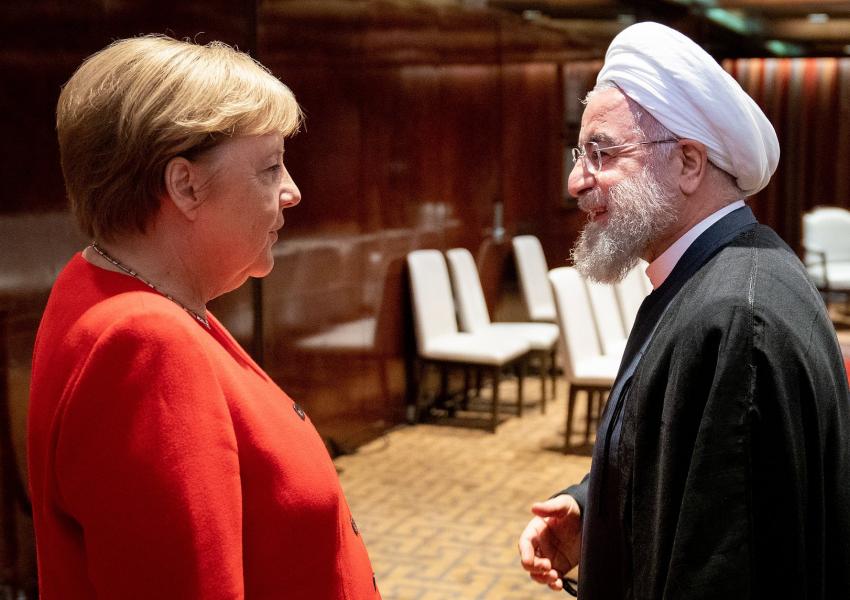
German Chancellor Angela Merkel told Iranian President Hassan Rouhani on Wednesday [February 17] that Tehran should take steps to increase chances of reviving its 2015 nuclear deal with world powers. Merkel’s spokesman Steffen Seibert said the chancellor had in a phone call expressed her concern over Iran breaching its commitments under the agreement, the JCPOA (Joint Comprehensive Plan of Action).
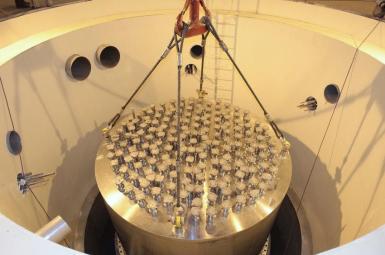
In its next breach, Iran plans on February 23 to reduce access of inspectors from the International Atomic Energy Agency (IAEA). Iran also informed the IAEA on Wednesday that it planned to install two additional cascades of relatively advanced IR-2m centrifuges, barred by the JCPOA, at its Natanz plant.
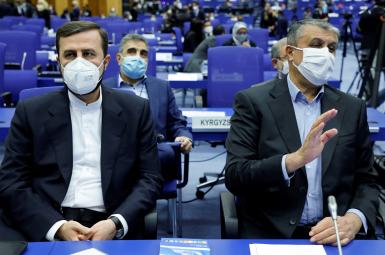
The agency announced on Wednesday that Rafael Mariano Grossi, the IAEA chief, would travel to Tehran on Saturday “to find a mutually agreeable solution for the IAEA to continue essential verification activities in the country.” Kazem Gharibabadi, Iran’s IAEA ambassador, wrote on Twitter that Grossi would discuss “how to continue cooperation in the light of new arrangements and development.”
While both Rouhani and US president Joe Biden have expressed a desire to revive the JCPOA, both sides have suggested the other should take the first steps. Iran has insisted that once the US lifts all sanctions, imposed by President Donald Trump on leaving the deal in 2018, it will reverse steps it has taken since 2019 extending its nuclear program beyond JCPOA limits.
Grossi pointed out in December that a plan was needed to sequence the US and Iran returning to the deal, but with the month-old Biden administration still stressing the need to consult allies, Iran’s Supreme Leader Ali Khamenei said earlier on Wednesday that Tehran wanted action “not words.”
Legislation originally passed by the Iranian parliament after November’s assassination of nuclear scientist Mohsen Fakhrizadeh set a February 21 deadline for limiting co-operation with IAEA inspectors by suspending operation of Iran’s Additional Protocol to the Nuclear Non-Proliferation Treaty if the US failed to lift sanctions as required under the JCPOA. Tehran said on Tuesday it would implement changes in IAEA access on February 23.
The series of steps taken by Iran breaching the JCPOA – including producing uranium metal, which while used as fuel by the Tehran research reactor is a potential part of a nuclear device – have been seen as ways to raise pressure on Washington.
While the three European signatories of the JCPOA have concerns over many aspects of Iranian policy, they have stressed the importance of reviving JCPOA, as have the two other signatories Russia and China. France announced on Wednesday that Foreign Minister Jean-Yves Le Drian would discuss Iran at a meeting on February 18 with counterparts from Germany and the United Kingdom. Antony Blinken, US Secretary of State, is expected to join by videolink.
Merkel’s intervention reflects a growing sense of urgency. A statement from the chancellor’s office said it was “now time for positive signals that create trust and raise the chances of a diplomatic solution.”
In another sign of diplomacy picking up pace, Ned Price, the State Department spokesman, said later on Wednesday that the new US Iran envoy Ron Malley had been in touch with China’s deputy foreign minister, Ma Zhaoxu. This was their second discussion on Iran and the JCPOA. They first spoke on February 10.